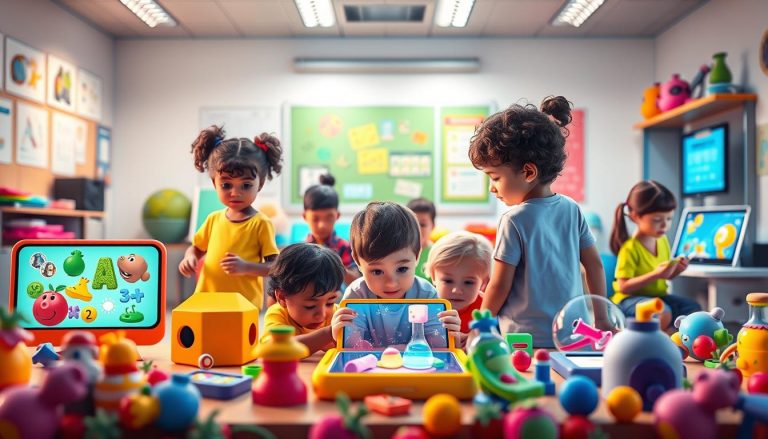
In today’s digital age, educational mobile games have become an essential tool for kids’ learning and development. These games are not just a form of entertainment but also a valuable educational resource, making learning fun and engaging.
Parents are increasingly seeking kids’ learning apps that can help their children develop new skills while having fun. The right fun games for children can enhance cognitive abilities, promote creativity, and support academic growth.
Key Takeaways
- Educational mobile games can enhance cognitive skills in children.
- Kids’ learning apps promote creativity and problem-solving.
- Fun games for children support academic growth and development.
- Parents can use these games to make informed decisions about screen time.
- Learning through play is an effective way to develop new skills.
The Educational Value of Digital Play for Children
Digital play is transforming the way children learn, offering a unique blend of entertainment and education. This blend is crucial in making learning engaging and fun for children.
Balancing Screen Time with Learning Opportunities
While concerns about screen time are valid, balancing screen time with learning opportunities is key. Parents can achieve this balance by choosing high-quality educational games that promote cognitive development.
For instance, games that involve problem-solving and critical thinking can be particularly beneficial. It’s also important for parents to monitor and limit screen time to ensure it doesn’t interfere with physical activity and social interaction.
Cognitive and Social Skills Development Through Gaming
Digital play can significantly enhance cognitive and social skills in children. Games that encourage collaboration and teamwork help develop social skills, while puzzles and strategy games improve cognitive abilities.
| Skill Developed | Type of Game | Example |
|---|---|---|
| Problem-Solving | Puzzle Games | Portal Knights |
| Collaboration | Multiplayer Games | Roblox |
| Critical Thinking | Strategy Games | Clash of Clans |
Top Mobile Games for Kids by Age Group
The world of mobile gaming offers a diverse array of educational experiences tailored to different age groups, enhancing learning and fun. As children progress through various developmental stages, the type of games that are most beneficial to them change. Here, we’ll explore some of the top mobile games categorized by age to help parents make informed decisions.
Preschoolers (Ages 2-4): Building Foundations
For preschoolers, mobile games should focus on basic skills such as literacy, numeracy, and motor skills. These games are designed to be engaging and interactive, laying the groundwork for future learning.
Early Literacy and Number Recognition Games
Games like ABCmouse and Endless Learning are excellent for introducing young children to letters and numbers. These apps use interactive games and activities to teach the alphabet, basic spelling, and simple arithmetic.
Motor Skills and Problem-Solving Games
Apps such as Toca Life and Duplo World help develop fine motor skills and problem-solving abilities. They offer a range of activities that encourage creativity and hand-eye coordination.
Elementary School Kids (Ages 5-8): Expanding Knowledge
As children enter elementary school, they can benefit from more complex educational content that builds on their foundational skills.
Math and Reading Adventure Games
Games like Prodigy Math and Reading Adventures offer engaging ways to improve math and reading skills. These apps make learning fun through interactive stories and challenges.
Science and Nature Exploration Games
Apps such as NASA Kids’ Club and National Geographic Kids provide interactive science and nature exploration. They encourage curiosity and a love for learning about the world around them.
| Age Group | Recommended Games | Skills Developed |
|---|---|---|
| Preschoolers (2-4) | ABCmouse, Endless Learning | Literacy, Numeracy |
| Elementary School Kids (5-8) | Prodigy Math, Reading Adventures | Math, Reading |
| Tweens (9-12) | Codemoji, Minecraft: Education Edition | STEM, Critical Thinking |
Tweens (Ages 9-12): Advanced Learning
For older children, mobile games can offer more advanced educational content, focusing on STEM subjects and critical thinking.
STEM-Focused Challenge Games
Apps like Codemoji and Robot Turtles introduce programming concepts and logical thinking. These games are both fun and challenging, promoting problem-solving skills.
Strategy and Critical Thinking Games
Games such as Minecraft: Education Edition and GeoGuessr encourage strategic thinking and geographical awareness. They provide a platform for kids to explore, create, and learn through interactive challenges.
Educational Mobile Games for Kids by Subject
The world of mobile games offers a plethora of educational content for children, categorized by subjects that cater to different learning needs. This diversity allows parents and educators to choose games that align with a child’s interests and academic requirements.
Mathematics and Logic Games
Mathematics and logic games are designed to enhance problem-solving skills and mathematical understanding in kids. These games range from simple arithmetic operations for younger children to complex algebraic expressions for older kids.
Examples of Math Games:
- Math Bingo
- Math Puzzle Games
- Logic Grid Puzzles
These games not only teach mathematical concepts but also improve logical reasoning and analytical thinking.
Language Arts and Reading Games
Language arts and reading games focus on improving literacy skills, including reading comprehension, vocabulary building, and grammar. Interactive stories, word games, and reading comprehension exercises are common features of these games.
Benefits of Language Arts Games:
- Enhanced reading skills
- Improved vocabulary
- Better comprehension
Science and Discovery Games
Science and discovery games introduce kids to the wonders of science, technology, engineering, and mathematics (STEM) through interactive experiments and activities. These games encourage curiosity and a deeper understanding of the natural world.
History and Geography Games
History and geography games educate children about different cultures, historical events, and geographical locations. Through interactive maps, timelines, and cultural studies, these games make learning about history and geography engaging and fun.
| Subject | Examples of Games | Learning Outcomes |
|---|---|---|
| Mathematics | Math Bingo, Math Puzzles | Problem-solving, mathematical understanding |
| Language Arts | Reading Comprehension Apps, Word Games | Literacy skills, vocabulary building |
| Science | Interactive Experiments, STEM Games | Understanding of STEM concepts, curiosity |
| History & Geography | Interactive Maps, Cultural Studies Games | Knowledge of history, geography, and cultures |
Free vs. Paid Mobile Games: Making Smart Choices
Mobile games have become an integral part of a child’s digital experience, with parents needing to navigate the pros and cons of free versus paid games. The decision between free and paid mobile games can be challenging, given the numerous options available.
High-Quality Free Games Worth Downloading
Several high-quality free mobile games offer educational value without the upfront cost. Games like Duolingo and National Geographic Kids provide engaging learning experiences. These games are not only entertaining but also offer a range of educational content that can help children develop various skills.
When selecting free games, it’s essential to review the privacy policies and understand any potential in-app purchase options to avoid unexpected costs.
Premium Games That Justify Their Price
On the other hand, some premium games justify their cost through the quality and depth of their educational content. Games like Endless Learning and Lightbot offer comprehensive learning experiences that can be worth the investment for many families.
These games often provide ad-free environments and robust educational content that can be particularly valuable for children’s learning and development.
Avoiding Hidden Costs and In-App Purchase Traps
One of the significant risks associated with free mobile games is the potential for hidden costs through in-app purchases. Parents should be cautious and monitor their children’s gaming activities to avoid unexpected expenses.
Setting up parental controls and regularly reviewing the apps your children use can help mitigate these risks and ensure a safe and cost-effective gaming experience.
Conclusion
Educational mobile games offer a valuable tool for children’s learning and development. By understanding the educational value of digital play, parents can make informed decisions about their child’s screen time.
When selecting educational mobile games, consider the child’s age and subject of interest. For preschoolers, games like Toca Life and PBS Kids provide a foundation for learning. For older kids, games such as Duolingo and National Geographic Kids offer advanced educational content.
To ensure a balanced approach, set limits on screen time and encourage physical activity. By doing so, parents can help their children reap the benefits of educational mobile games while maintaining a healthy lifestyle. Some useful parenting tips include monitoring in-app purchases and exploring high-quality free games.
FAQ
What are the benefits of educational mobile games for kids?
Educational mobile games can enhance cognitive and social skills in children, including problem-solving, critical thinking, and collaboration. They can also support learning in various subjects such as mathematics, language arts, science, and history.
How can I ensure a healthy balance between screen time and other activities for my child?
To balance screen time with other activities, parents can set limits on the amount of time spent playing mobile games, encourage physical activity, and engage their child in other hobbies and interests. It’s also essential to monitor the content of the games and choose ones that are both fun and educational.
What are some recommended mobile games for preschoolers?
For preschoolers, some recommended mobile games include those that focus on early literacy and number recognition, such as ABCmouse and Toca Life, as well as games that develop motor skills and problem-solving, like PBS Kids and Khan Academy Kids.
Are free mobile games suitable for children?
While some free mobile games can be suitable for children, parents should be cautious of hidden costs and in-app purchase traps. It’s essential to review the game’s content and check for any additional costs before allowing children to play.
How can I choose the best educational mobile games for my child?
To choose the best educational mobile games, parents should consider their child’s age and developmental stage, the game’s content and educational value, and reviews from other parents. They should also look for games that align with their child’s interests and learning style.
Can mobile games really support learning in subjects like math and reading?
Yes, many mobile games are designed to support learning in subjects like math and reading. For example, Math Games and Reading Comprehension apps can provide interactive and engaging ways for children to practice and improve their skills in these areas.
What are some premium mobile games that are worth the cost?
Some premium mobile games that are worth the cost include Minecraft: Education Edition, National Geographic Kids, and Duolingo, which offer high-quality educational content and engaging gameplay.